
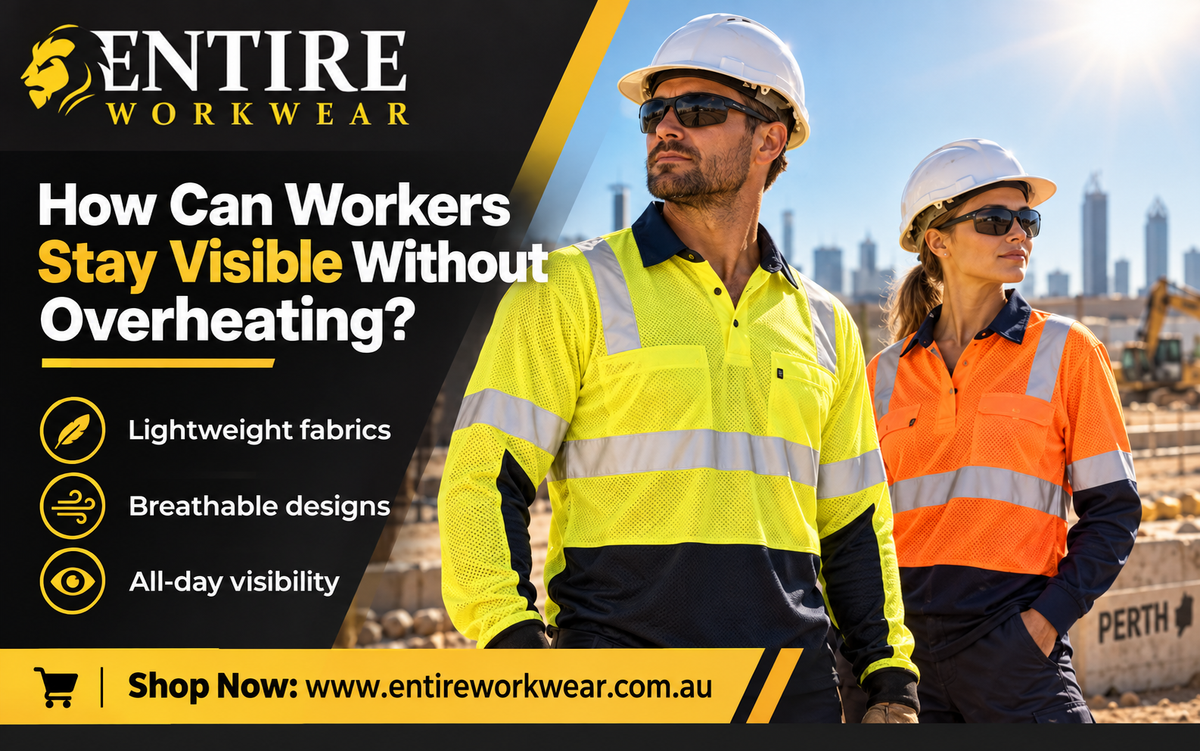
Working outdoors in warm conditions creates a practical challenge: workers still need to remain clearly visible while dealing with heat, physical activity and long periods in the sun. Wearing more clothing is not automatically better, especially if heavy or poorly ventilated garments leave workers uncomfortable before the shift is halfway through.
For businesses choosing hi vis workwear perth, the goal should be to balance visibility with comfort, movement and the conditions of the actual job. The right garment can help a worker stay noticeable around vehicles, machinery and other people without making hot conditions unnecessarily harder to manage.
Why Can Hi-Vis Clothing Feel Hot?
Not every high-visibility garment is designed for the same environment.
A thick hoodie may be useful on a cold morning but uncomfortable during an exposed afternoon shift. A lightweight polo may work well for active work in warmer conditions but may not provide enough coverage for another role.
Heat can become more noticeable when clothing:
- Uses unnecessarily heavy fabric
- Has limited airflow
- Fits too closely around the body
- Is layered without considering changing temperatures
- Becomes wet with perspiration
- Restricts normal movement
- Is selected for appearance rather than the actual task
This is why choosing high visibility workwear Perth businesses can use effectively requires more than simply selecting a bright colour.
Start With the Worker’s Actual Environment
Before selecting a shirt, polo, vest or jacket, consider where and how the person will be working.
Someone working in an open construction area may spend hours under direct sunlight. A warehouse worker may work under cover but still perform physically demanding tasks. A delivery driver may regularly move between an air-conditioned vehicle and outdoor loading areas.
Ask practical questions such as:
Will the Worker Be in Direct Sun?
Long periods outdoors can make fabric weight, sleeve design and ventilation particularly important.

How Physical Is the Job?
Workers who lift, carry, climb or walk continuously may generate considerably more body heat than someone performing a less active role.
Does the Temperature Change During the Shift?
Perth mornings can feel very different from later parts of the day. Clothing that works at the beginning of a shift may become uncomfortable as temperatures rise.
Are Additional Layers Required?
Some workers may need jackets, rainwear or other protective garments at different points during the day. The complete clothing system should therefore be considered rather than choosing each item separately.
Choose Fabric Weight With the Season in Mind
Heavy-duty does not always have to mean heavy fabric.
When comparing hi vis workwear for warmer conditions, consider whether the fabric is appropriate for the season and type of activity. Lightweight garments can often be more practical for active outdoor jobs where workers are moving throughout the day.
However, lightweight clothing still needs to suit the workplace.
The best choice depends on factors such as:
- Required durability
- Frequency of washing
- Exposure to rough surfaces
- Type of work being performed
- Required coverage
- Workplace procedures
- Weather conditions
For example, a worker doing relatively light duties may value a breathable polo, while someone performing demanding trade work may require a more durable long-sleeve shirt.
Look for Designs That Allow Air to Move
Airflow can make a noticeable difference when working in warm conditions.
Garment construction matters alongside fabric choice. Depending on the product and the work environment, useful warm-weather features may include breathable materials, ventilated areas, lightweight panels and designs that do not unnecessarily restrict movement.
A worker should also be able to bend, reach, climb and perform normal duties without the garment pulling tightly across the shoulders or torso.
Poor fit can make otherwise suitable clothing feel much warmer.
Do Not Automatically Avoid Long Sleeves
When temperatures rise, short sleeves may seem like the obvious choice. But outdoor work involves more than temperature alone.
Long-sleeve garments can provide additional arm coverage, which may be useful for workers exposed to the sun or certain workplace conditions. The important point is choosing a garment designed appropriately for warmer environments rather than assuming that all long-sleeve work shirts will feel the same.
A lightweight, appropriately fitted long-sleeve shirt may be more practical for some outdoor roles than a heavier short-sleeve garment.
Businesses should therefore consider both coverage and comfort rather than making decisions based only on sleeve length.
Visibility and Comfort Should Work Together
Workers should not have to choose between being noticeable and being comfortable.
When selecting high visibility workwear perth, businesses should think about how the garment will actually perform across an entire shift. Clothing that becomes extremely uncomfortable may tempt workers to roll up sleeves, remove an outer layer or alter the way the garment is worn.

The aim is to choose clothing that workers can realistically keep on and use correctly throughout their duties.
Visibility should be considered alongside:
- Breathability
- Fit
- Freedom of movement
- Fabric weight
- Coverage
- Seasonal conditions
- Job-specific requirements
This is particularly important where employees move between different working environments during the same day.
What Our Previous Job-Site Safety Guide Highlighted
In our earlier article, Reducing Job Site Risks With Properly Selected Clothing, we discussed an important principle: work clothing should match the actual hazards, activities and environment of the job.
That idea is especially relevant during warmer weather.
The earlier guide explained that visibility should not be considered separately from comfort and movement. It also highlighted how outdoor workers can face sunlight, heat, wind and changing weather, making garment selection part of broader workplace planning.
Another important point is that one garment type is not suitable for every worker.
A vest may provide practical visibility for a person entering a work area briefly, while somebody spending an entire shift outdoors may need different coverage. Likewise, rainwear, jackets and layered garments need to be chosen carefully so they do not create unnecessary heat or restrict movement.
The takeaway is simple: choose clothing around the job rather than expecting one hi-vis solution to work everywhere.
Use Layering Instead of One Heavy Garment
Changing conditions can make layering useful.
A worker starting early in the morning might need an additional outer layer but no longer need it as temperatures rise. Choosing separate layers makes it easier to adapt during the day.
A practical system might involve:
- A lightweight hi-vis shirt or polo as the main garment
- An appropriate outer layer for cooler conditions
- Rain protection when weather requires it
- Removing unnecessary layers as conditions become warmer
However, workers still need to maintain the required level of visibility after removing an outer garment.
For example, if a hi-vis jacket is removed, the garment underneath should still be suitable for the work environment.
Fit Matters More Than Many Buyers Realise
Work clothing should allow enough room for movement without becoming excessively loose.
A shirt that is too tight can feel restrictive when lifting, reaching or bending. On the other hand, clothing that is unnecessarily oversized can interfere with movement and may not sit correctly.
When ordering uniforms for a team, avoid assuming every worker will need the same cut simply because they perform similar jobs.
Consider:
- Body shape
- Garment cut
- Shirt length
- Sleeve length
- Shoulder movement
- Space required for layering
- Whether the worker regularly bends or reaches
Trying different sizes or carefully reviewing sizing information before a large order can help reduce problems later.
Match the Garment to the Activity
Different jobs place different demands on work clothing.
Construction and Trades
Workers may need durable garments that support movement while remaining practical in exposed conditions.
Warehousing and Logistics
Although much of the work may happen under cover, constant walking, lifting and loading can create significant body heat.

Road and Traffic Work
Visibility around moving vehicles can be especially important, so garment selection should consider both workplace visibility requirements and weather.
Maintenance Teams
Workers may move between indoor and outdoor spaces, making adaptable clothing useful.
Delivery and Transport
Drivers can experience regular temperature changes when moving between vehicles, loading zones and outdoor areas.
Thinking about these differences helps businesses avoid purchasing the same garment simply because everyone works for the same company.
Keep Clothing Clean and in Good Condition
Heat is not the only factor affecting workplace visibility.
Dirt, stains, fading and worn reflective components may affect how noticeable a garment appears. Hi-vis clothing should therefore be inspected regularly rather than used until it physically falls apart.
Workers and supervisors should watch for:
- Significant fading
- Permanent staining
- Damaged reflective elements
- Torn fabric
- Failed seams
- Broken fasteners
- Poor fit
- Excessive wear
Follow the garment manufacturer's washing and care instructions, as different fabrics and reflective materials may require different handling.
Plan Uniforms Around Perth’s Changing Conditions
Choosing uniforms for Perth workers is easier when businesses think seasonally.
Instead of purchasing only one style for the entire year, consider whether workers need a small wardrobe that can adapt to temperature and weather changes.
This could include lightweight shirts or polos for warmer conditions, additional layers for cooler mornings, jackets for winter and suitable rainwear where required.
A planned approach may also make repeat ordering simpler because the business can establish an approved range for different seasons rather than making new decisions every time clothing is required.
Why Choose Entire Workwear?
Entire Workwear provides businesses, tradespeople and individual workers with access to practical work clothing for a wide range of roles and seasons. Customers can compare shirts, polos, jackets, hoodies, vests, pants and other workplace garments when building a uniform suitable for their team. Rather than treating every workplace the same, selecting from different garment types, fits and designs makes it easier to create a workwear combination suited to the worker, task and conditions.
Frequently Asked Questions
What type of hi-vis clothing is suitable for hot weather?
There is no single garment that suits every warm-weather workplace. Look at fabric weight, breathability, coverage, fit, job requirements and the amount of physical activity involved. Lightweight shirts and polos may suit some active roles, while other workers may require long sleeves or additional protective features.
Are long-sleeve hi-vis shirts too hot for summer?
Not necessarily. Fabric construction and weight can make a major difference. A lightweight long-sleeve garment may provide useful coverage while remaining practical for warm conditions. The right option depends on the job and workplace requirements.
Is a hi-vis vest enough for outdoor work?
A vest may be useful for some situations, but it is not automatically suitable for every role. Workers who spend long periods outdoors may also need appropriate coverage from shirts, polos or other garments depending on their duties and workplace procedures.
How should hi-vis workwear fit?
It should allow normal workplace movement without feeling excessively tight or loose. Workers should be able to bend, reach, lift and perform their usual tasks comfortably.
Can workers wear layers with hi-vis clothing?
Yes, where appropriate. Layering can help workers adapt to temperature changes, but the clothing arrangement must continue to meet relevant workplace visibility and safety requirements when layers are added or removed.
When should hi-vis clothing be replaced?
Replacement may be needed when garments become badly faded, permanently stained, damaged, poorly fitting or when reflective components are significantly worn. Regular inspection is more useful than relying only on the age of the garment.
Build a Workwear System for the Conditions
Staying visible in warm conditions is not simply about wearing the brightest or thickest garment available. The better approach is to consider the worker, the activity, the weather and how the clothing will perform over a full shift.
Businesses should think about lightweight fabric options, appropriate coverage, fit, ventilation, layering and seasonal changes when selecting uniforms. A well-planned clothing system can support visibility while helping workers move comfortably through demanding tasks and changing temperatures.
Explore Entire Workwear's range of hi vis workwear to compare practical options for different jobs, seasons and workplace conditions.
Choosing clothing around real working conditions can make uniforms easier to wear consistently while helping teams remain visible, professional and prepared for the day ahead.